










Compare AFERIY Portable Power Stations
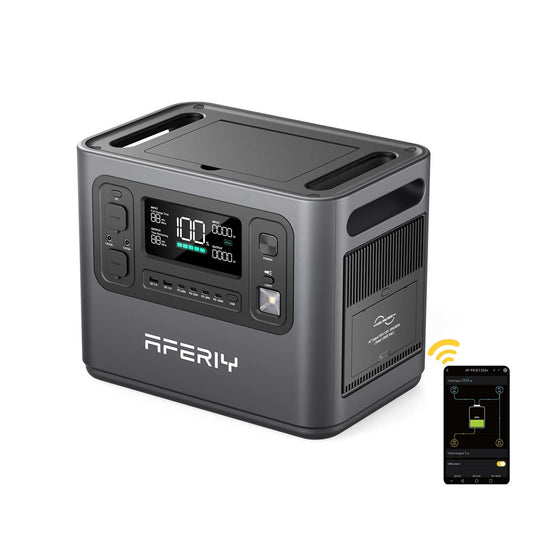
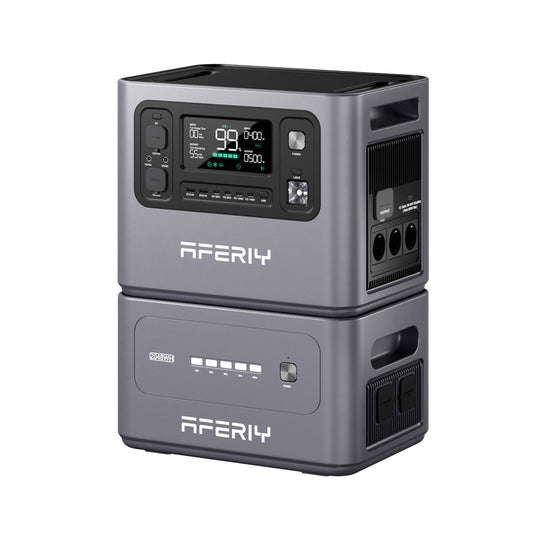
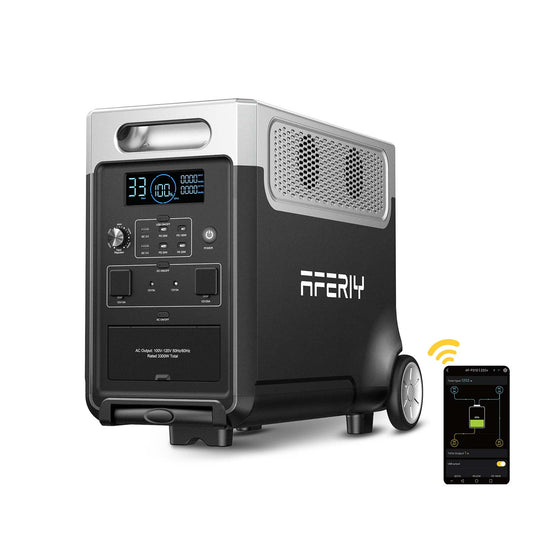
AFERIY P310 vs P280 vs P210 vs P180 Pro — Model Comparison
Discover the essential differences between AFERIY's four most popular power stations. This guide helps you choose the model best suited to your needs: power, capacity, runtime and real-world use cases.
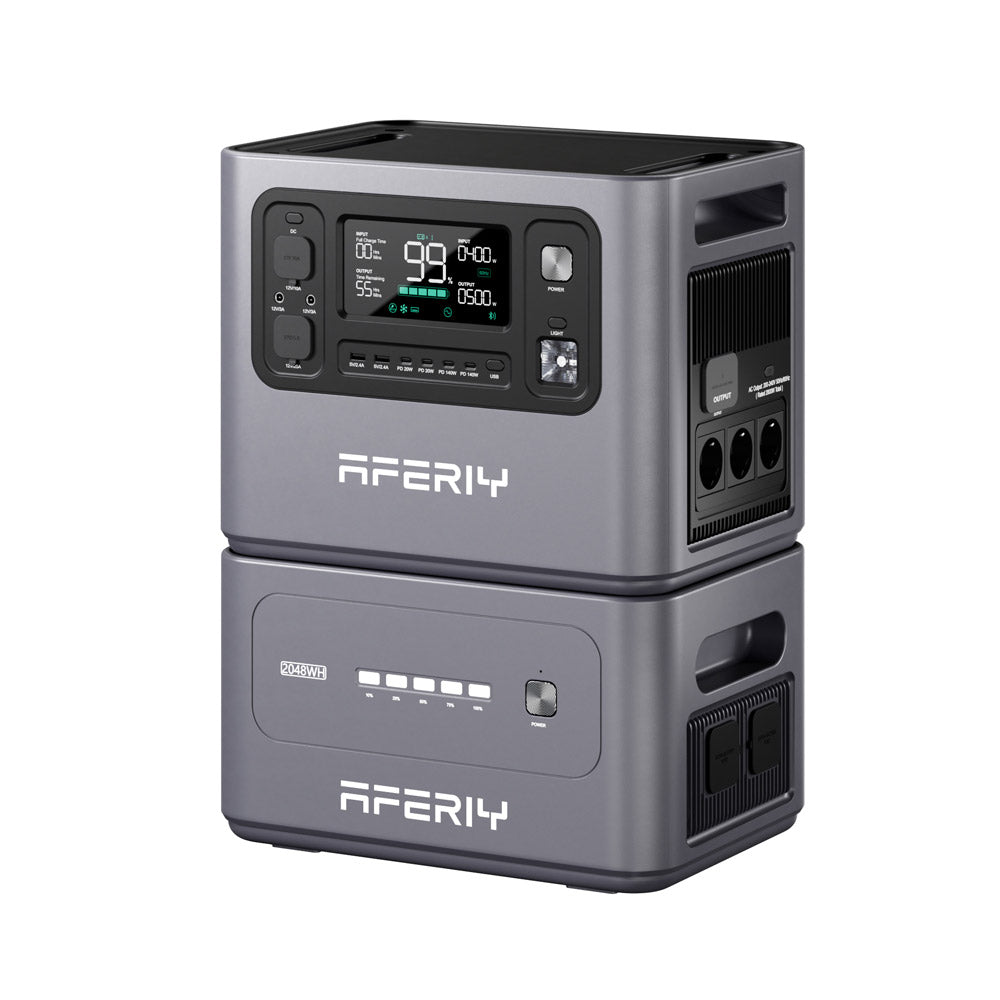
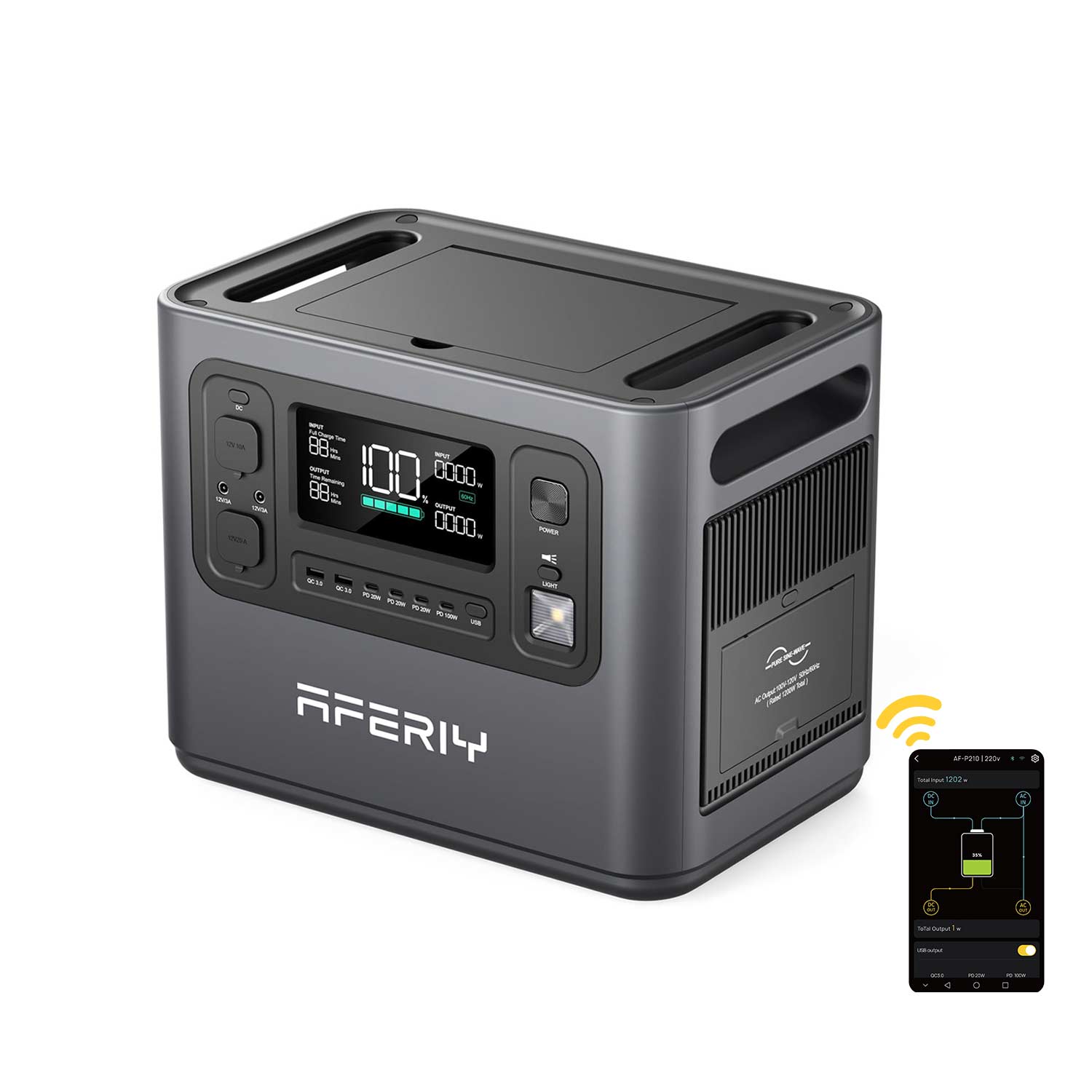
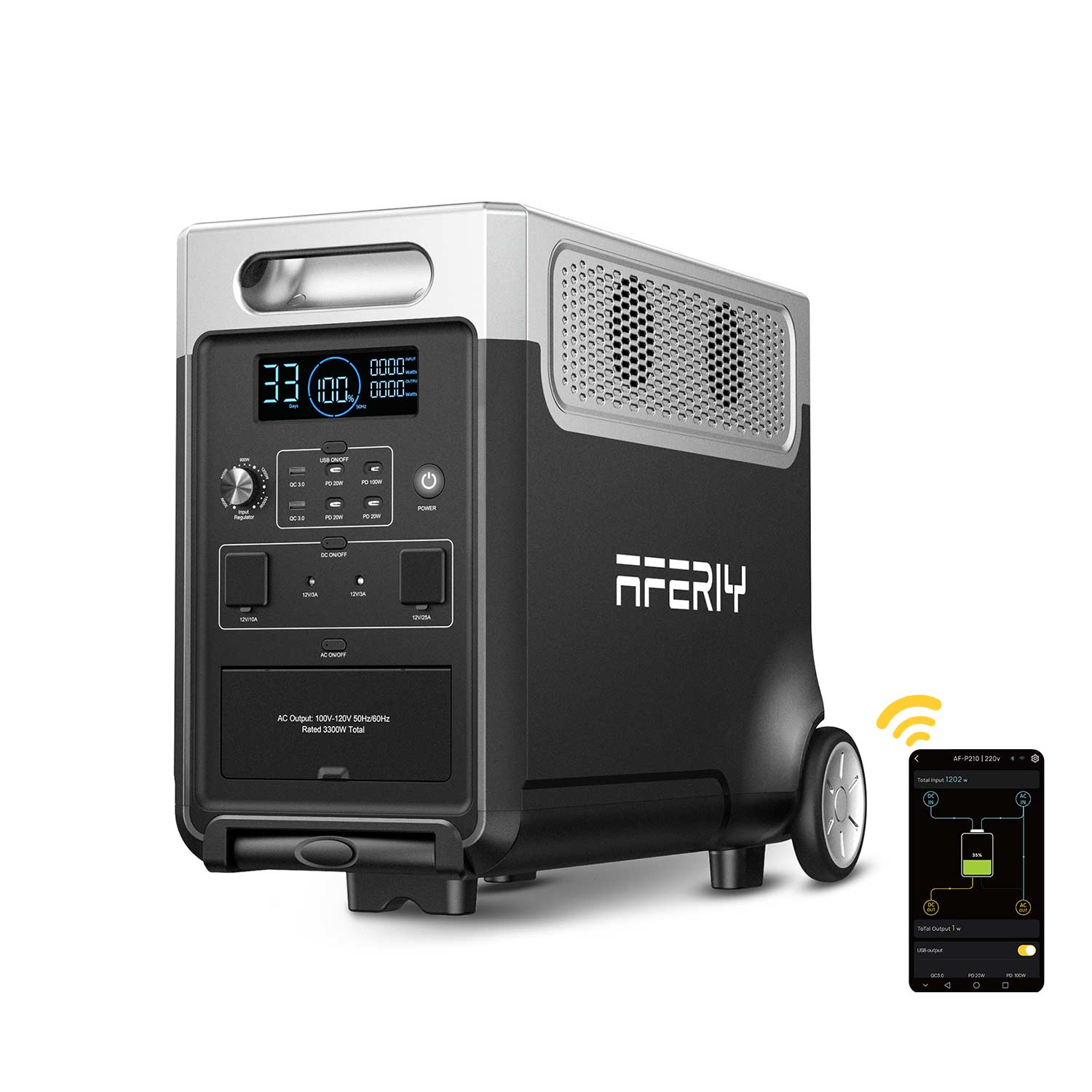
| Product Name | Haven3600 Flagship | Haven2800 Bestseller | Haven2400 Best Value | P180 Pro Lightweight |
|---|---|---|---|---|
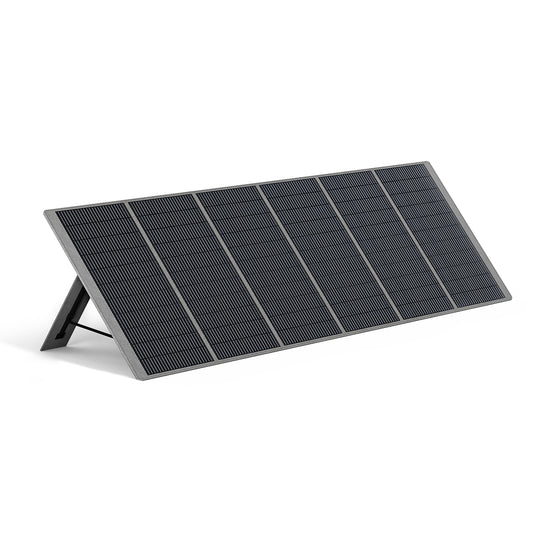
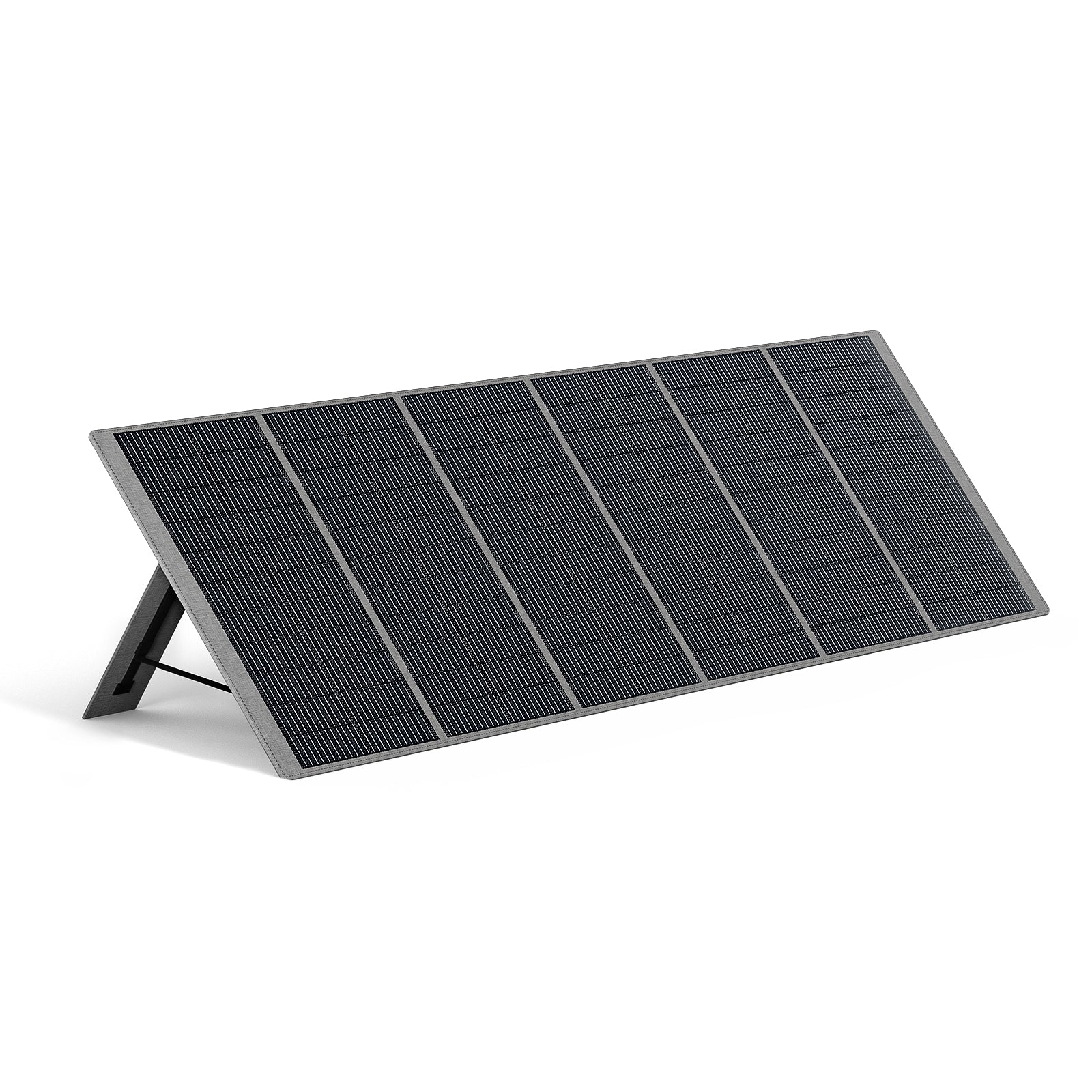
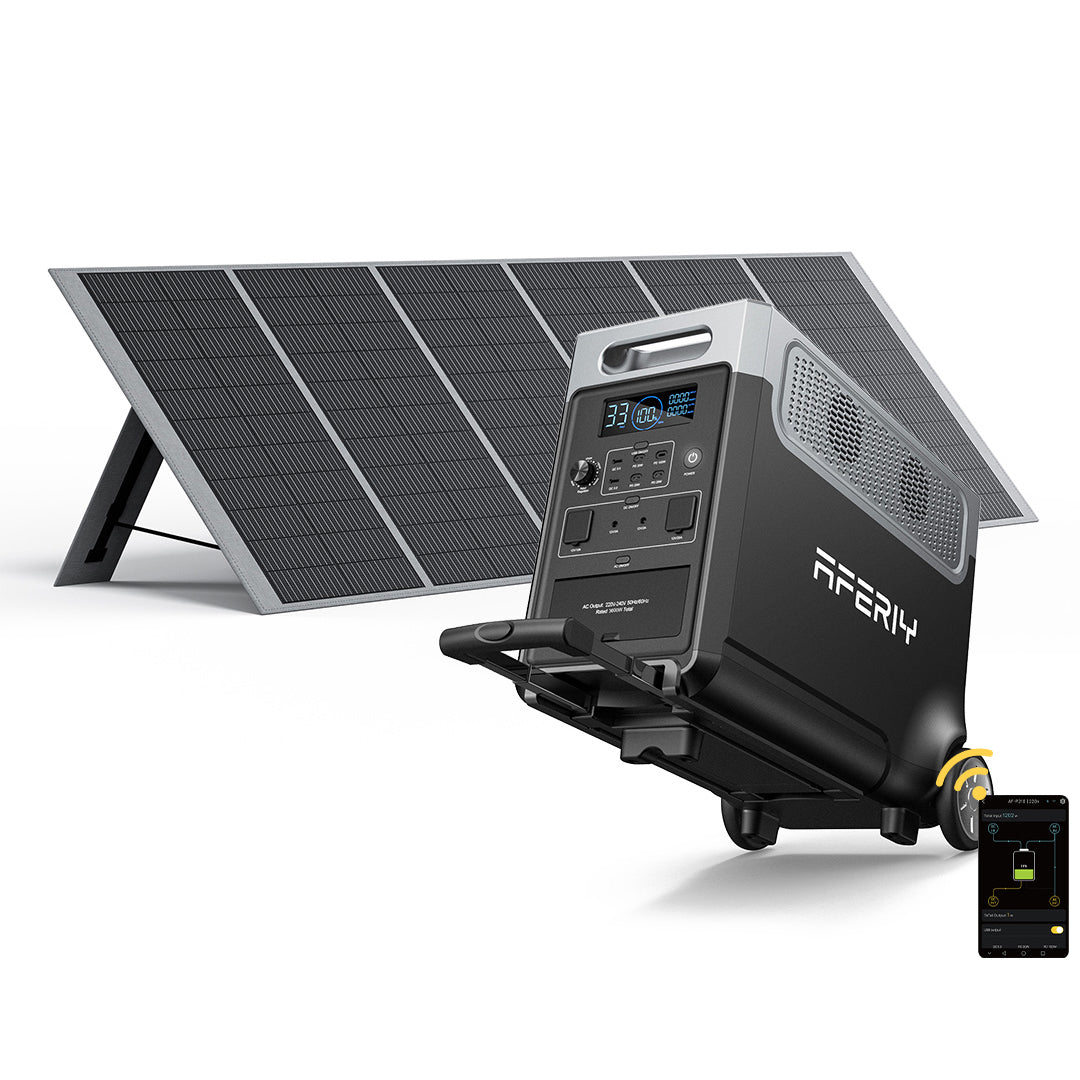
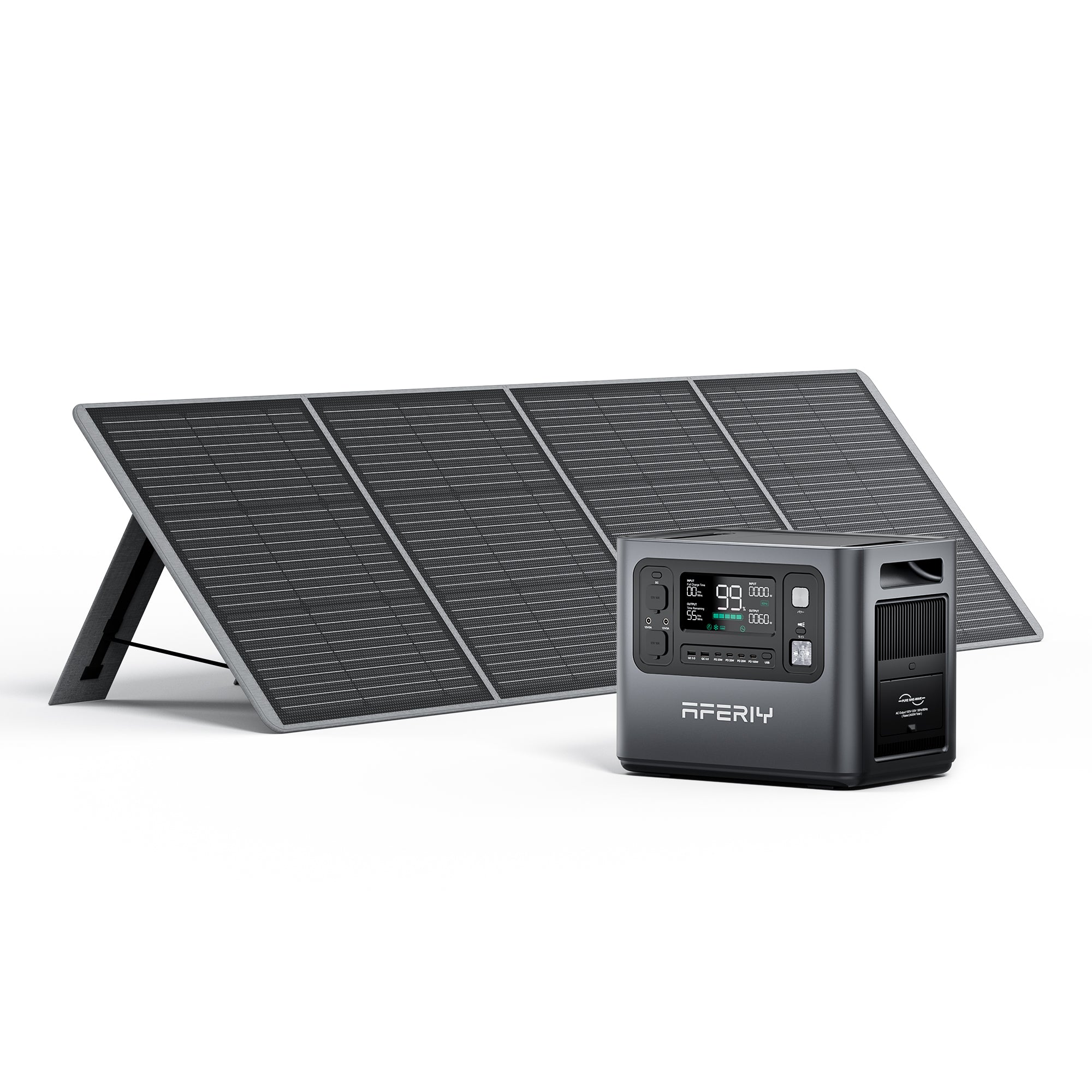
| Product Image |  |
 |
 |
 |
| Model | AF-P310 | AF-P280 | AF-P210 | Nomad1800 Pro |
| Rated Power | 3600W | 2800W | 2400W | 1800W |
| Capacity |
3840Wh Expandable to 11520Wh |
2048Wh Expandable to 10240Wh |
2048Wh Non-expandable |
1024Wh Expandable to 5120Wh |
| Capacity Expansion | Compatible with P310-B | Compatible with P280-B | No | Compatible with P180-B |
| Battery Type | LiFePO4 · 4000+ cycles | |||
| Management System | MPPT Controller · BMS | |||
| Inverter Type | Pure Sine Wave | |||
| App Control | Supported | |||
| UPS Function | Switching < 10ms | |||
| Eco Mode | Supported | |||
| AC Input | Max 2200W | Max 1800W | Max 1100W | Max 1000W |
| Adjustable AC Input | 400/800/1200/1600/2200W | 600/900/1200/1500/1800W | 300/500/700/900/1100W | — |
| Solar Input |
Max 2000W · 12-160V · 20A XT90 |
Max 1200W · 11.5-55V · 20A 2x XT90 (600W each) |
Max 500W · 11.5-50V · 20A XT90 |
Max 500W · 11.5-55V XT60 |
| Maximum Input | 4200W | 3000W | 1600W | 1500W |
| AC + Solar Charging | Supported | |||
| AC Charging Time | ~ 2h | ~ 1.5h | ~ 2.5h | ~ 1.1h |
| Solar Charging Time | ~ 2.5h | ~ 2h | ~ 4.5h | ~ 3h |
| AC + Solar Charging Time | ~ 1.3h | ~ 1.5h | ~ 1.7h | ~ 1h |
| Car Charging Time | ~ 32h (120W) | ~ 17.5h (120W) | ~ 17.5h (120W) | ~ 11h (96W) |
| AC Output | 3 x 220-240V | 3 x 220-240V | 3 x 220-240V | 2 x 220-240V |
| USB-A Output | 2 x QC3.0 18W | 2 x 5V/2.4A | 2 x QC3.0 18W | 2 x QC3.0 18W |
| USB-C Output | 3 x PD 20W | 2x PD 20W + 2x PD 140W | 3x PD 20W + 1x PD 100W | 1x PD 20W + 1x PD 140W |
| DC5521 Output | 2 x 12V/3A | |||
| XT60 Output | 12V/25A | 12V/25A | 12V/25A | — |
| Cigarette Lighter Output | 12V/10A | |||
| LED Mode | LED · SOS · Blink | |||
| Weight | 42 kg | 21.6 kg | 22 kg | 11.64 kg |
| Dimension (mm) | 584x321x464 | 398x280x315 | 398x280x315 | 350x220x263 |
| Warranty | 2 Years Basic + 5 Years Extended | |||
| Buy Now | Buy Now | Buy Now | Buy Now | |
Notes
The runtime values are estimates only. Actual performance may vary depending on battery level, connected devices, operating conditions and power consumption.
- Portable power stations experience energy loss during power conversion. The LiFePO4 battery conversion efficiency is approximately 85%.
- To protect battery lifespan, the system does not fully discharge or fully charge the battery. Actual usable capacity may vary depending on usage conditions.
- When using AC output mode, the power station consumes approximately 10W per hour for internal management and inverter operation.
AFERIY Portable Power Station Runtime Reference
Estimated runtime for common devices when the power station is fully charged.
| Device | P310 3840Wh |
P280 2048Wh |
P210 2048Wh |
P180 Pro 1024Wh |
|---|---|---|---|---|
| Camping Light (8W) | ~ 304.8h | ~ 162.5h | ~ 162.5h | ~ 81.3h |
| Speaker (10W) | ~ 257.9h | ~ 137.5h | ~ 137.5h | ~ 68.8h |
| Light (10W) | ~ 257.9h | ~ 137.5h | ~ 137.5h | ~ 68.8h |
| Mobile Phone (3915mAh) | ~ 191.5 charges | ~ 102 charges | ~ 102 charges | ~ 51 charges |
| Speaker (16W) | ~ 176.4h | ~ 94.1h | ~ 94.1h | ~ 47.1h |
| Camera (2280mAh) | ~ 293 charges | ~ 156 charges | ~ 156 charges | ~ 78 charges |
| iPad (32Wh) | ~ 95 charges | ~ 51 charges | ~ 51 charges | ~ 25 charges |
| Switch (4310mAh) | ~ 177 charges | ~ 94 charges | ~ 94 charges | ~ 47 charges |
| Drone (3500mAh) | ~ 210 charges | ~ 112 charges | ~ 112 charges | ~ 56 charges |
| CPAP (40W) | ~ 47.9h | ~ 25.5h | ~ 25.5h | ~ 12.8h |
| Car Fridge (60W) | ~ 37.2h | ~ 19.9h | ~ 19.9h | ~ 9.9h |
| MacBook Pro 14" (2021) (70Wh) | ~ 46 charges | ~ 25.5 charges | ~ 25 charges | ~ 12 charges |
| Projector (65W) | ~ 35.3h | ~ 18.8h | ~ 18.8h | ~ 9.4h |
| Portable Coffee Maker (80W) | ~ 30.5h | ~ 16.3h | ~ 16.3h | ~ 8.1h |
| TV (110W) | ~ 23.9h | ~ 12.8h | ~ 12.8h | ~ 6.4h |
| Refrigerator (120W) | ~ 22.3h | ~ 11.9h | ~ 11.9h | ~ 6.0h |
| Water Pump (120W) | ~ 22.3h | ~ 11.9h | ~ 11.9h | ~ 6.0h |
| Projector (200W) | ~ 14.6h | ~ 7.8h | ~ 7.8h | ~ 3.9h |
| PS5 (1560mAh) | ~ 93.5 charges | ~ 50 charges | ~ 50 charges | ~ 25 charges |
| 3D Printer (360W) | ~ 8.6h | ~ 4.6h | ~ 4.6h | ~ 2.3h |
| Blender (500W) | ~ 6.3h | ~ 3.4h | ~ 3.4h | ~ 1.7h |
| Refrigerator (500W) | ~ 6.3h | ~ 3.4h | ~ 3.4h | ~ 1.7h |
| Ice Maker (600W) | ~ 5.3h | ~ 2.8h | ~ 2.8h | ~ 1.4h |
| Coffee Maker (600W) | ~ 5.3h | ~ 2.8h | ~ 2.8h | ~ 1.4h |
| Power Saw (600W) | ~ 5.3h | ~ 2.8h | ~ 2.8h | ~ 1.4h |
| Power Drill (800W) | ~ 4.0h | ~ 2.2h | ~ 2.2h | ~ 1.1h |
| Corded Mower (850W) | ~ 3.8h | ~ 2.0h | ~ 2.0h | ~ 1.0h |
| Coffee Maker (1000W) | ~ 3.3h | ~ 1.7h | ~ 1.7h | ~ 0.9h |
| Kettle (1000W) | ~ 3.3h | ~ 1.7h | ~ 1.7h | ~ 0.9h |
| Electric Hammer (1000W) | ~ 3.3h | ~ 1.7h | ~ 1.7h | ~ 0.9h |
| Electric Drill (1080W) | ~ 3.0h | ~ 1.6h | ~ 1.6h | ~ 0.8h |
| Power Tool (1080W) | ~ 3.0h | ~ 1.6h | ~ 1.6h | ~ 0.8h |
| Cutter (1100W) | ~ 3.0h | ~ 1.6h | ~ 1.6h | ~ 0.8h |
| Chainsaw (1100W) | ~ 3.0h | ~ 1.6h | ~ 1.6h | ~ 0.8h |
| Electric Hammer (1260W) | ~ 2.6h | ~ 1.4h | ~ 1.4h | ~ 0.7h |
| Electric Drill (1260W) | ~ 2.6h | ~ 1.4h | ~ 1.4h | ~ 0.7h |
| Microwave (1300W) | ~ 2.5h | ~ 1.3h | ~ 1.3h | ~ 0.7h |
| Hair Dryer (1300W) | ~ 2.5h | ~ 1.3h | ~ 1.3h | ~ 0.7h |
| Circular Saw (1400W) | ~ 2.3h | ~ 1.3h | ~ 1.3h | ~ 0.6h |
| Electric Grill (1450W) | ~ 2.3h | ~ 1.2h | ~ 1.2h | ~ 0.6h |
| Kettle (1500W) | ~ 2.2h | ~ 1.2h | ~ 1.2h | ~ 0.6h |
| Frying Pan (1500W) | ~ 2.2h | ~ 1.2h | ~ 1.2h | ~ 0.6h |
| Electric Skillet (1500W) | ~ 2.2h | ~ 1.2h | ~ 1.2h | ~ 0.6h |
| Electric Cooker (1500W) | ~ 2.2h | ~ 1.2h | ~ 1.2h | ~ 0.6h |
| Electric Kettle (1500W) | ~ 2.2h | ~ 1.2h | ~ 1.2h | ~ 0.6h |
| Hair Dryer (1600W) | ~ 2.1h | ~ 1.1h | ~ 1.1h | ~ 0.5h |
| Oven (1650W) | ~ 2.0h | ~ 1.1h | ~ 1.1h | ~ 0.5h |
| Air Conditioner (1800W) | ~ 1.8h | ~ 1.0h | ~ 1.0h | ~ 0.5h |
| Heater (2200W) | ~ 1.5h | ~ 0.8h | ~ 0.8h | — |
| Oven (2200W) | ~ 1.5h | ~ 0.8h | ~ 0.8h | — |
| Electric Griddle (3000W) | ~ 1.1h | — | — | — |
Important Note
The runtime values are estimates only. Actual performance may vary depending on battery level, connected devices, operating conditions and power consumption.
- Portable power stations experience energy loss during power conversion. The LiFePO4 battery conversion efficiency is approximately 85%.
- To protect battery lifespan, the system does not fully discharge or fully charge the battery. Actual usable capacity may vary depending on usage conditions.
- When using AC output mode, the power station consumes approximately 10W per hour for internal management and inverter operation.
- "—" indicates the device exceeds the power station's rated output and cannot be powered.